- In endoscopic surgery the surgeon operates while watching a camera image on a monitor. A head-mounted display puts that image directly in front of the surgeon’s eyes.
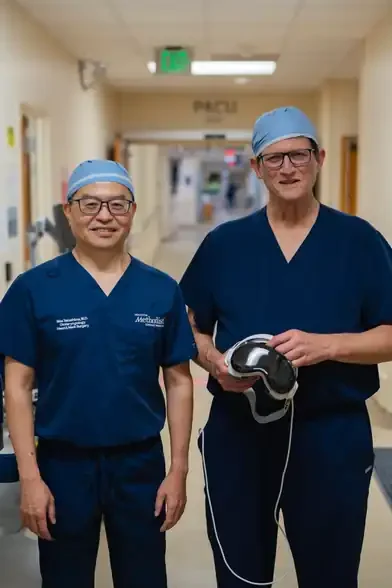
- The Department of Otolaryngology – Head & Neck Surgery at Houston Methodist is adopting the Apple Vision Pro headset as the surgical display for endoscopic sinus and skull base surgery.
- Dr. Takashima has performed more than 70 endoscopic sinus and skull base operations this way. To his knowledge, that is more than any other surgeon worldwide.
- Whether a headset improves the surgeon’s view, comfort or workload is being studied. It has not been shown to change results for patients.

Why the display matters
In endoscopic sinus and skull base surgery, the surgeon never looks directly at the area being operated on. A thin telescope with a camera is passed through the nostril, and the surgeon works while watching the image on a monitor, usually mounted on an arm across the operating table. That can mean holding a turned or tilted head position for hours. Neck and back strain is a recognized problem among endoscopic surgeons.
How the headset is used
With the headset, the live endoscope image appears as a virtual screen in front of the surgeon’s eyes, in place of the operating-room monitor. The operation, the instruments and the steps of the procedure are unchanged. The standard monitor stays in the room, and the surgeon can switch back to it at any time.
In skull base operations, where a rhinologist and a neurosurgeon work together, both surgeons can wear a headset.
What is being studied
Houston Methodist has registered an observational study of the Apple Vision Pro as a head-mounted virtual monitor for procedures that are normally done while watching a screen (ClinicalTrials.gov NCT07797556). After each case, the surgeon rates the image quality against a traditional monitor, reports physical symptoms such as neck, back and shoulder discomfort, and completes a standard workload questionnaire. The study also records whether each case could be completed with the headset. Results have not yet been reported.
Dr. Takashima describes the platform, which grew out of Houston Methodist’s work with Apple and KARL STORZ, in a Houston Methodist article: Innovation Thrives at Houston Methodist Otolaryngology – Head & Neck Surgery.
What it means for patients
Nothing about the operation is different for the patient. Planning from CT and MRI scans and image guidance are used as before. The headset is a different way for the surgeon to see the same camera image. If you have questions about it, ask at your visit.
Related: Endoscopic skull base surgery · Revision sinus surgery · AI in rhinology
Case numbers and the worldwide comparison are as reported by Dr. Takashima in November 2026; no public registry tracks these operations. Apple Vision Pro is a product of Apple Inc. This article is general education and is not personal medical advice.